Exact calendar difference
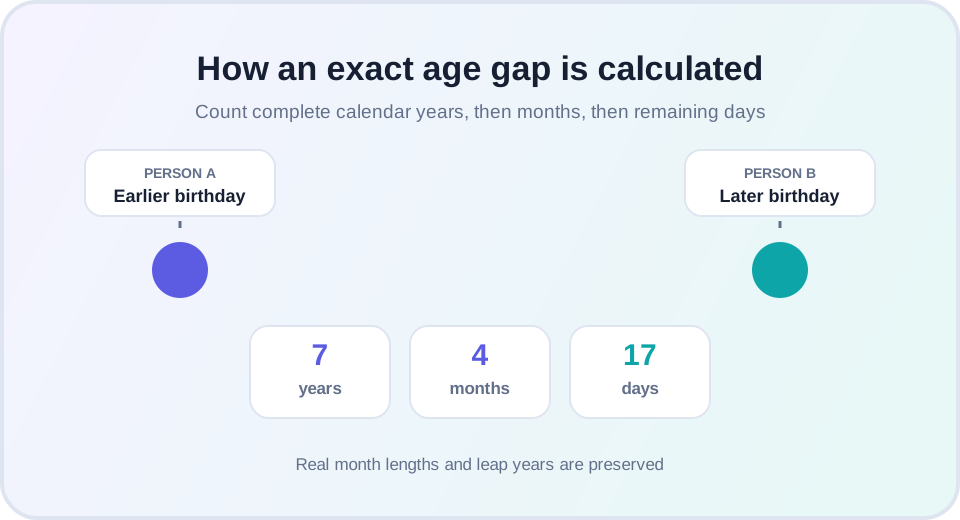
The calculator orders the two dates, counts complete calendar years, then complete calendar months, then remaining days. It clamps dates at the end of shorter months so an input on the 29th, 30th or 31st remains valid when moving through the calendar.
Total days
Total days uses the elapsed UTC-midnight interval between the normalized dates. Using UTC avoids daylight-saving changes altering a date-only answer.
Total months
Because months have different lengths, “total months” is an estimate based on the average Gregorian month length of 30.436875 days. The calendar years–months–days answer is the precise display for date arithmetic.
Leap-day birthdays
February 29 is retained for exact date differences. For a next-birthday countdown in a non-leap year, this implementation uses February 28. Legal systems can treat leap-day birthdays differently, so this convention must not be used as legal advice.
Generation ranges
Generation labels are approximate, U.S.-focused cultural groupings. The tool uses widely cited ranges for Silent Generation, Baby Boomers, Generation X and Millennials. Newer cohort boundaries are less settled.
Privacy model
Calculator forms are processed in the browser. Calculator forms contain no endpoint that stores names or dates of birth. Site owners should preserve this design when adding analytics by never including input values in event labels, URLs or logs.
Testing checklist
- Same date returns zero
- Dates around February 29
- End-of-month comparisons
- Reverse date order
- One-day and one-year boundaries
- Future birth-date rejection
- Minor-safe dating interpretation
Report an issue
Send the exact input dates, expected result and calculator page through the contact page. Do not send private names or unnecessary personal information.